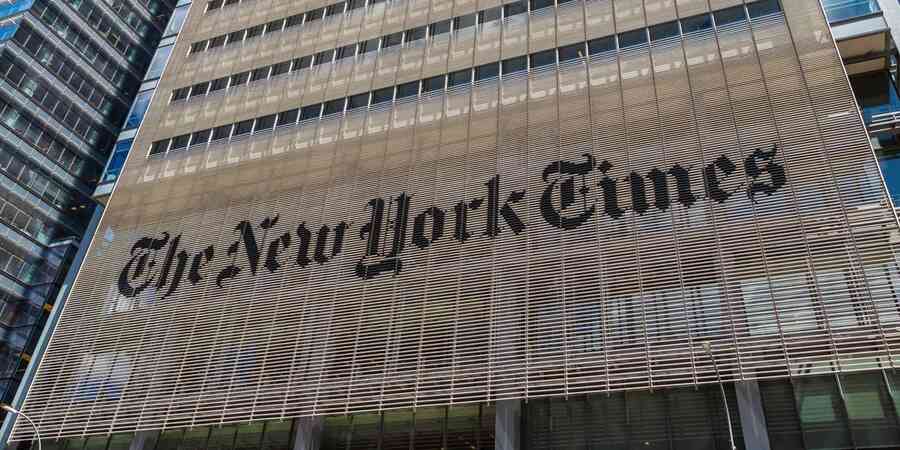
The NYT's Monopoly on Liberal Discourse Must Be Challenged
The New York Times has achieved something close to a monopoly on liberal political discourse. Other outlets take their cues from it. Democratic politicians quote it. Activists are shaped by it. And that influence is being wielded in service of a centrist, status-quo politics that consistently softens the reality of what the Republican Party has become. The paper treats the MAGA right as a normal political actor, frames progressive ideas as impractical, and has pushed Democrats toward catastrophic miscalculations — from believing Trump's 2016 victory was about economic anxiety, to endorsing Biden's conciliatory approach, to casting doubt on candidates like Mamdani while platforming figures like Christopher Rufo.

This isn't a question of whether the Times does good journalism — it often does. The problem is its outsized influence on a left that needs to be bolder, not more cautious. When one outlet effectively sets the agenda for an entire political coalition, and that outlet's implicit message is that moderation is wisdom and progressivism is a liability, the consequences are political paralysis at exactly the wrong moment.

We call on liberals, activists, and engaged citizens to diversify where they get their news — and on the media broadly to challenge the Times' agenda-setting power rather than simply amplify it. The Guardian, independent newsletters, and progressive outlets are covering this moment with more clarity and urgency. A democracy under threat needs a press ecosystem that matches the stakes — not one paper setting the terms for everyone else.
By signing, you’re agreeing to receive periodic messages from The Hound—you can unsubscribe anytime. For texts, message & data rates apply.
While on this site, you may also see content from other organizations that use CivicShout.com, the content of which The Hound is not responsible for.