Tell the USDA and DOI: End Livestock-Driven Destruction
When we talk about ecosystem destruction, the world’s attention usually turns to burning rainforests and chainsaws in the Amazon. But a quieter crisis is unfolding across vast grasslands, sweeping savannas, and life-sustaining wetlands — ecosystems that cover enormous portions of our planet, store massive amounts of carbon, support extraordinary biodiversity, and protect communities from climate extremes.

These landscapes are being plowed under, drained, and converted at a staggering pace — largely to make way for livestock grazing and the crops used to feed industrial animal agriculture.

New research published in the Proceedings of the National Academy of Sciences finds that non-forest ecosystems, such as grasslands, savannas, and wetlands, are being destroyed for agriculture at nearly four times the rate of forests. And just like deforestation in the Amazon, the biggest driver is livestock production.

From 2005 to 2020, about half of all non-forest ecosystem conversion was to create pasture for grazing. Much of the remaining destruction was to grow crops like corn and soy to feed cattle, pigs, and poultry. In some major agricultural countries, more than half of cropland expansion is tied directly to livestock.

This matters deeply for the climate and for biodiversity.

Grasslands cover more of Earth’s surface than any other ice-free ecosystem and store roughly one-third of the planet’s terrestrial carbon — nearly as much as forests. Wetlands are among the most powerful carbon sinks on Earth. Yet they receive far less protection and far less policy attention.

Protecting forests while allowing grasslands and wetlands to be destroyed simply shifts the crisis elsewhere.

We urge the U.S. Department of Agriculture, the Department of the Interior, and other world leaders to:

• Include grasslands, savannas, and wetlands in national climate and biodiversity commitments.

• End subsidies and policies that incentivize livestock expansion into natural ecosystems.

• Strengthen supply-chain standards to prevent ecosystem conversion for meat, dairy, animal feed, and biofuels.

• Align agricultural policy with climate science to protect all natural ecosystems — not just forests.

The science is clear. Protecting forests alone is not enough.

We need bold action now to safeguard the world’s remaining grasslands and wetlands before they are gone.

The petition to the USDA, DOI, and other world leaders reads: Grasslands, savannas, and wetlands are being destroyed for agriculture at nearly four times the rate of forests — largely to expand livestock grazing and grow feed for industrial animal production. We urge you to protect all natural ecosystems, end subsidies and policies that incentivize livestock-driven land conversion, and strengthen conservation standards to safeguard these critical carbon sinks and wildlife habitats. Protecting forests alone is not enough — bold action is needed now to stop the destruction of the world’s remaining grasslands and wetlands.
_______

Source: https://insideclimatenews.org/news/25022026/grasslands-wetlands-gobbled-up-by-agriculture-livestock/
_______

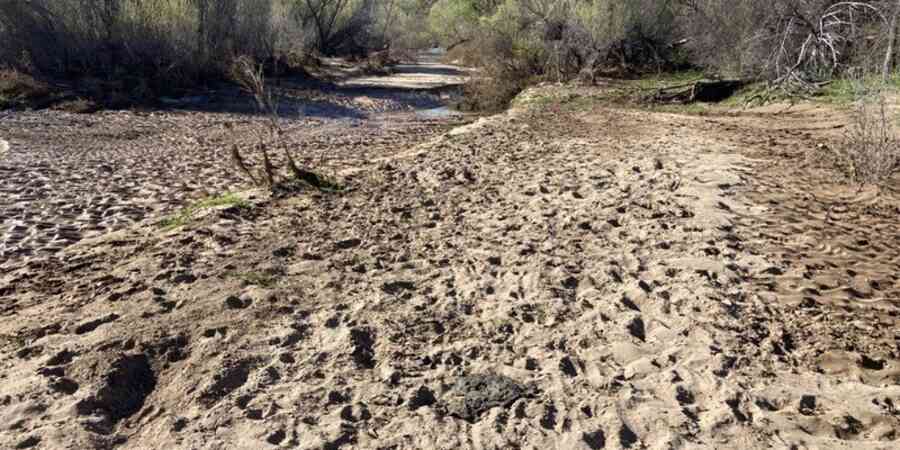
Photo: Damage from unauthorized cattle grazing in Western yellow-billed cuckoo critical habitat, Agua Fria River, Horseshoe allotment, March 28, 2023.
By signing, you’re agreeing to receive periodic messages from Animal Commons—you can unsubscribe anytime. For texts, message & data rates apply.
While on this site, you may also see content from other organizations that use CivicShout.com, the content of which Animal Commons is not responsible for.