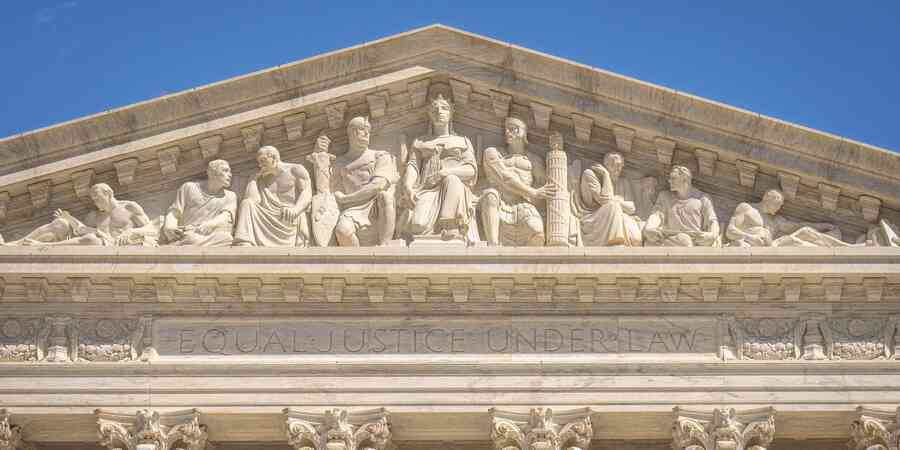
Tell the Media to Expose The Supreme Court Playing Politics
The Supreme Court’s latest intervention in Alabama’s congressional districts is about more than election law—it raises fundamental questions about whether the Court is acting as a neutral judicial body or as a political institution. By repeatedly stepping into disputes over voting rights, redistricting, and representation, the Court is shaping the political landscape in ways that directly affect who holds power and whose votes count.

Yet too much mainstream coverage treats these rulings as technical legal decisions or ideological disagreements rather than confronting their real-world political consequences. When the Court alters the rules governing elections and representation, the impact is not abstract—it changes who gets elected, which communities have a voice, and how democracy functions. Reporting that focuses narrowly on legal reasoning often obscures those broader stakes.

We call on major news organizations to cover these decisions with greater scrutiny and candor—examining not just the legal arguments, but the political consequences and patterns behind them. The public deserves reporting that asks whether the Supreme Court is acting as an impartial arbiter or increasingly functioning as a political actor in the nation's most important democratic disputes.
By signing, you’re agreeing to receive periodic messages from The Hound—you can unsubscribe anytime. For texts, message & data rates apply.
While on this site, you may also see content from other organizations that use CivicShout.com, the content of which The Hound is not responsible for.