Tell Club Med: Say No to Lethal Shark Nets
A newly opened luxury resort should not become the reason sharks and other marine animals are trapped, injured, and killed.

On July 4, Club Med opened its first South African resort near Tinley Manor Beach on the KwaZulu-Natal coast. Now, as the development is expected to bring more visitors to the area, local authorities are pursuing environmental approval for shark nets and possibly baited drumlines near the resort.

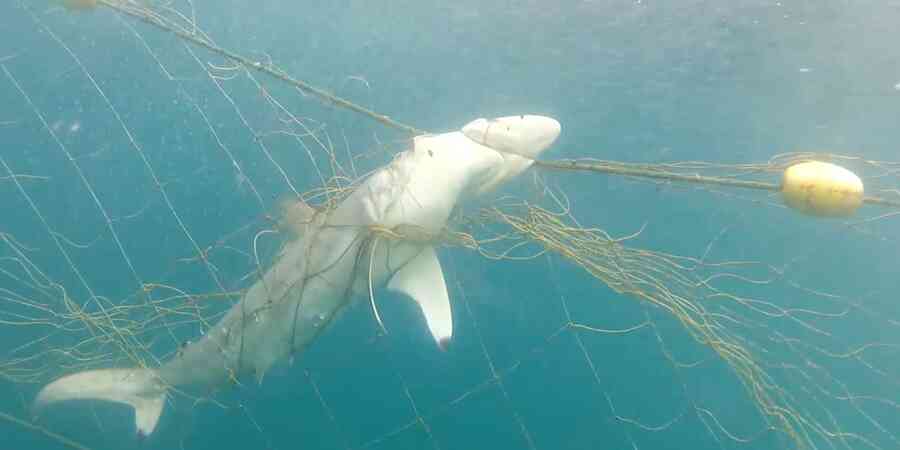
These devices are not solid barriers that separate swimmers from sharks. They are lethal fishing gear designed to catch sharks near swimming beaches. Animals can struggle for hours before drowning, suffocating, or dying from severe injuries. Baited drumlines can leave sharks hooked and exhausted, while nets may entangle animals that never posed any threat to people.

Killing sharks also harms the wider ocean ecosystem. Sharks are important predators that help maintain balance in marine food webs. Removing them can disrupt relationships among fish, rays, turtles, and other species, with consequences that can spread far beyond a single beach.

The proposed site is roughly 500 meters from the uThukela Marine Protected Area, which provides important habitat for threatened sharks and rays, humpback dolphins, and other wildlife. Leatherback turtles also use these waters.

The danger is not hypothetical. Shark-control equipment along the KwaZulu-Natal coast has killed large numbers of sharks and other marine animals over decades. Fewer than 500 endangered Indian Ocean humpback dolphins are believed to remain in South African waters, and in February 2026, a juvenile dolphin was caught and killed in a shark net near Richards Bay.

Tinley Manor has a troubling history of its own. When shark nets were previously used there between 1978 and 1993, the beach recorded the third-highest humpback-dolphin catch rate per kilometer of net in KwaZulu-Natal.

Club Med does not hold sole authority over what happens at this public beach. But the company is far from powerless. Its resort is central to the expected increase in tourism, and local officials have approved a potential shark-control agreement involving Club Med if the project receives environmental authorization.

Club Med should use that influence to prevent cruelty and ecological damage—not help normalize it.

Please sign the petition urging Club Med to publicly oppose lethal shark nets and drumlines and press local officials to adopt coexistence measures such as trained shark spotters, drones, stronger lifeguard services, public warnings, responsible swimming protocols, and scientifically supported nonlethal technologies.

The petition to Club Med reads: Publicly oppose shark nets and lethal drumlines near your newly opened Tinley Manor resort. Use your influence with local officials to advance nonlethal measures that protect beachgoers without subjecting sharks to prolonged suffering or killing dolphins, turtles, rays, and other marine wildlife.
_______

Sources:

https://www.france24.com/en/africa/20260314-shark-nets-%E2%82%AC100-million-club-med-resort-threaten-south-african-endangered-species-scientists-warn

https://news.mongabay.com/2026/03/proposed-shark-net-near-club-med-resort-in-south-africa-sparks-conservation-clash/
By signing, you’re agreeing to receive periodic messages from Animal Commons—you can unsubscribe anytime. For texts, message & data rates apply.
While on this site, you may also see content from other organizations that use CivicShout.com, the content of which Animal Commons is not responsible for.