Restore Ancient Forests, Don't Destroy Them for War
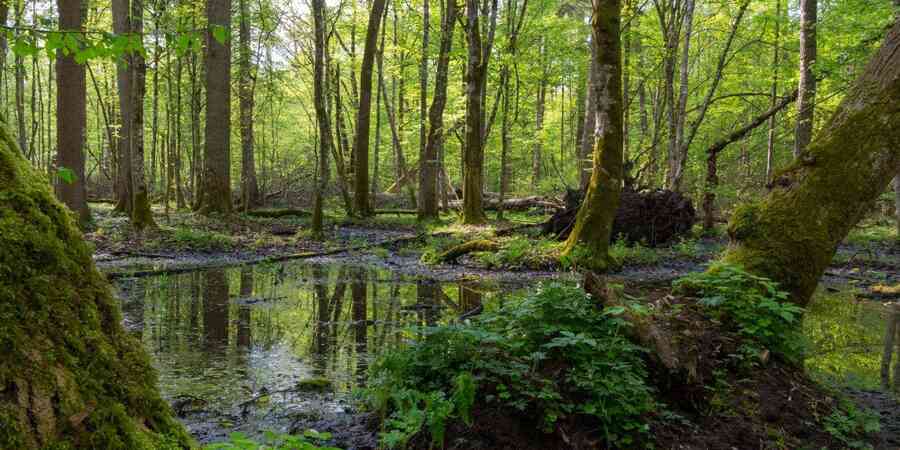
For 12,000 years, an extraordinary forest on the border of Poland and Belarus has sheltered wolves, lynx, European bison, and countless other animals. Now, as military tensions rise in Eastern Europe, this irreplaceable ecosystem faces another threat: the destruction of wildlife habitat to make way for military fortifications.

Conservationists have proposed a remarkable alternative: restore the forest instead of destroying it.

It's an emerging approach called "warwilding" — restoring forests, wetlands, and other natural landscapes so they can protect wildlife while also serving as natural barriers against military invasion. Waterlogged marshes and bogs can bog down tanks and other heavy military vehicles, while dense forests, fallen trees, and winding rivers make it harder for invading forces to move troops and equipment across the landscape.

Instead of clearing forests, draining wetlands, and pouring concrete, governments can let nature recover — creating healthier wildlife habitats while making potential invasion routes more difficult to navigate.

The idea is gaining traction.

Poland's Białowieża Forest is one of Europe's last remaining primeval forests. Its ancient trees, rivers, and wetlands provide critical habitat for rare and threatened wildlife, including European bison that were once driven to extinction in the wild.

Yet decades of logging, drainage, road construction, and border militarization have damaged this extraordinary ecosystem. Border fencing has already disrupted wildlife movement, while roads and security operations have further fragmented habitat.

Now Poland's massive East Shield defense initiative could inflict additional damage through military construction, anti-tank ditches, and other infrastructure.

Scientists have offered another way forward.

By restoring wetlands, allowing rivers to follow their natural courses, and protecting dense forests, Poland could help preserve wildlife habitat while creating natural barriers that are difficult for heavy military vehicles to cross.

Poland's military has shown interest in this nature-based approach, and the government has announced approximately $120 million in European funding for restoration and related border-defense measures.

But conservationists warn that progress remains painfully slow, while road projects continue to threaten the forest.

UNESCO has also raised concerns about border fortifications and habitat fragmentation, calling for careful assessment of the environmental impacts of the East Shield project.

Restoring Białowieża's wetlands would help protect biodiversity, retain precious water, and safeguard ecosystems increasingly threatened by drought.

Of course, protecting nature should never become an excuse for more militarization. Peace, diplomacy, and the protection of human life must remain paramount. And wildlife should not have to demonstrate military usefulness to deserve protection.

But if governments are determined to strengthen border defenses, they should not destroy ecosystems that have survived for thousands of years when less destructive alternatives are available.

Please sign the petition urging Poland's Ministry of Climate and Environment to accelerate restoration of Białowieża Forest, protect its wildlife, and prevent further destruction in the name of national security.

The petition to Poland's Minister of Climate and Environment reads: I urge you to accelerate the restoration and lasting protection of Białowieża Forest and its surrounding wetlands. Prioritize scientifically guided ecological restoration over destructive military infrastructure, logging, drainage, and unnecessary road expansion. Protect wildlife migration routes, require rigorous environmental assessments, and ensure that conservation remains a priority independent of military objectives. This ancient forest and the animals who depend on it deserve lasting protection, not further destruction.

_______

Sources:

https://news.mongabay.com/video/2026/10/restoring-a-12000-year-old-forest-to-help-defend-polands-border/
By signing, you’re agreeing to receive periodic messages from Animal Commons—you can unsubscribe anytime. For texts, message & data rates apply.
While on this site, you may also see content from other organizations that use CivicShout.com, the content of which Animal Commons is not responsible for.